A work queue stores tasks until background processes, called workers, are ready to run them. In a Postgres-backed queue, each task is a row. Two workers must not claim the same row at the same time, and a task must become available again if its worker crashes.
SELECT ... FOR UPDATE locks a chosen row for the current transaction.
SKIP LOCKED tells another worker to move past that row instead of waiting for
it. Together they solve the short claim transaction. They do not keep a job
owned after the transaction commits, so the row also needs a lease and a
fencing token.
- mechanism
- Row lock
- job it performs
- Stops two transactions from changing the same candidate together
- what it does not solve
- Ends when the claim transaction ends
- mechanism
- SKIP LOCKED
- job it performs
- Lets another worker claim a different ready row instead of waiting
- what it does not solve
- Does not recover a job after a worker crash
- mechanism
- Lease
- job it performs
- Makes abandoned work eligible again after a deadline
- what it does not solve
- Cannot stop an old worker that wakes up late
- mechanism
- Attempt number
- job it performs
- Rejects a late write from an older owner
- what it does not solve
- Cannot undo an email or payment already sent outside Postgres
WITH next_job AS (
  SELECT id
  FROM jobs
  WHERE (status = 'pending' AND run_at <= now())
     OR (status = 'running' AND lease_until < now())
  ORDER BY run_at, id
  FOR UPDATE SKIP LOCKED
  LIMIT 1
)
UPDATE jobs AS j
SET status = 'running',
    claimed_by = $1,
    claimed_at = now(),
    lease_until = now() + $2::interval,
    attempt = j.attempt + 1
FROM next_job
WHERE j.id = next_job.id
RETURNING j.*;
The common table expression selects and locks one candidate. Other claimers
skip that row. The UPDATE records the owner, expiry, and a new attempt number
before the same statement commits. The row lock then disappears; lease_until
is the durable evidence that the worker may still be alive.
Two partial indexes keep the claim from scanning completed history:
CREATE INDEX jobs_pending_due_idx ON jobs (run_at, id)
WHERE status = 'pending';

CREATE INDEX jobs_running_lease_idx ON jobs (lease_until, id)
WHERE status = 'running';
The crash that the row lock cannot solve
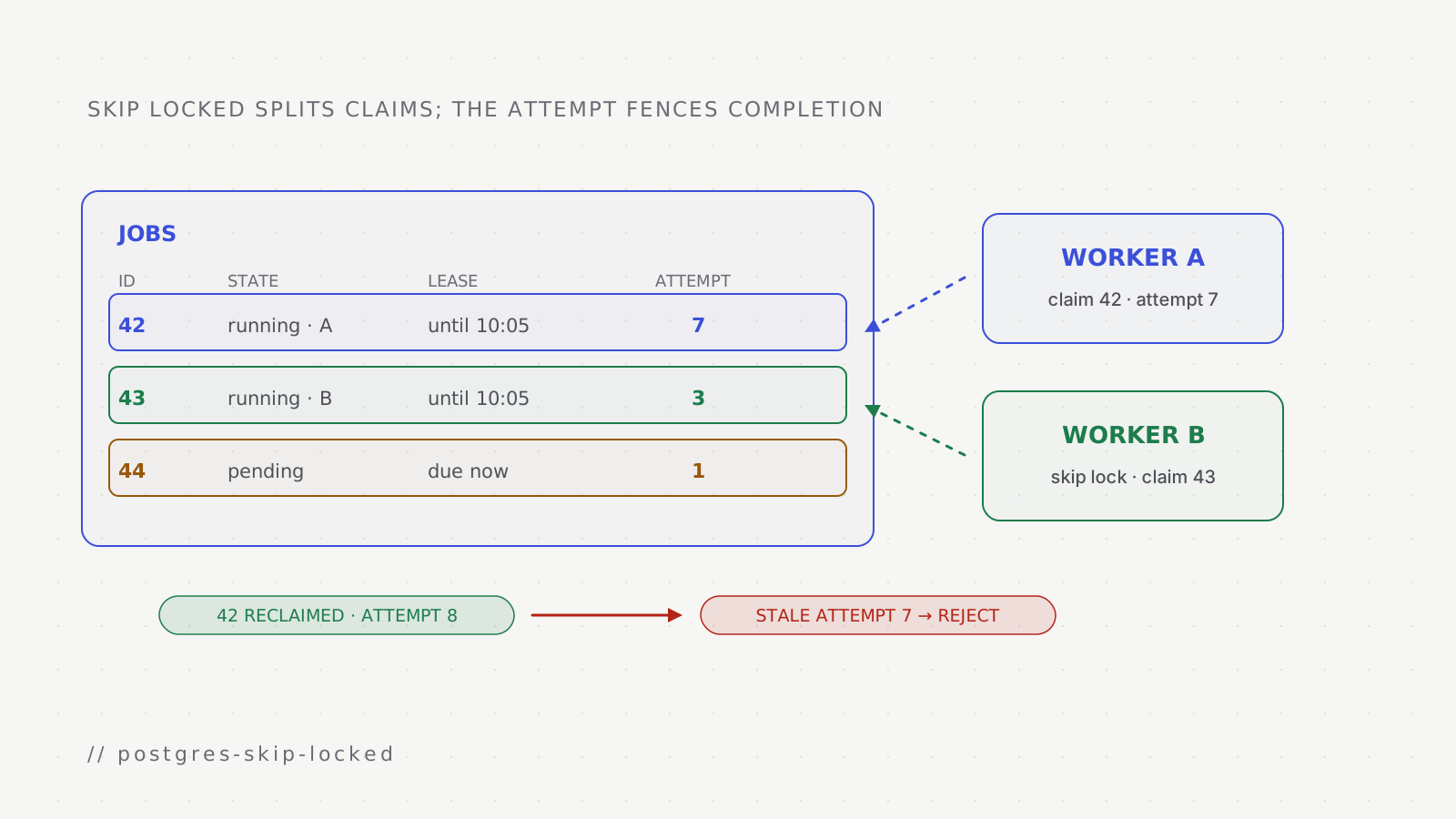
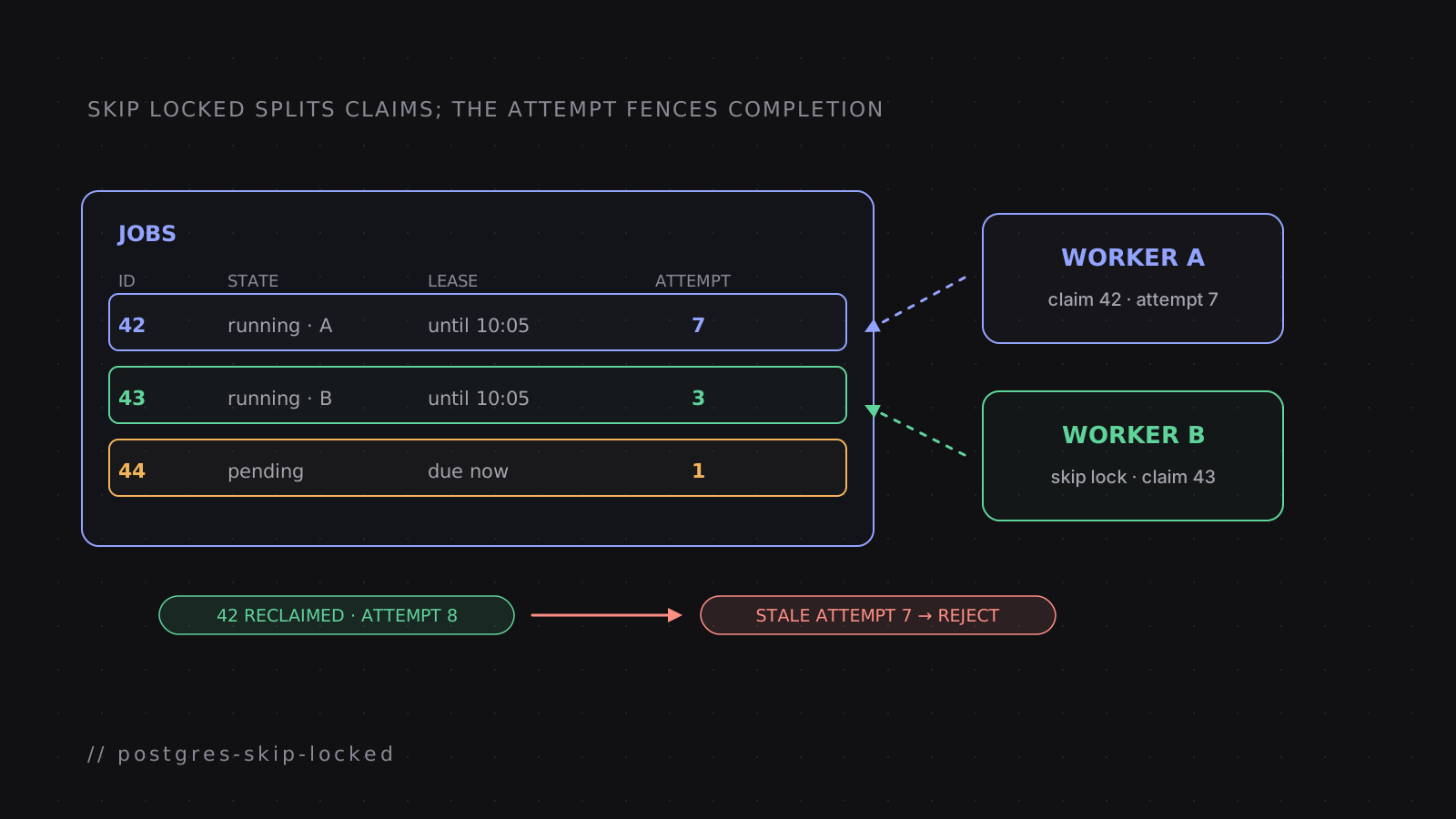
Worker A claims job 42 with attempt 7. The transaction commits, so Worker A no longer holds a row lock. It then pauses long enough for the lease to expire. Worker B reclaims the same row as attempt 8 and finishes first. If Worker A wakes up and writes without checking its attempt, its stale result can replace Worker B's result.
A lease expires while the first worker is paused
claim job 42
attempt 7 · lease until 10:05
worker pauses
no renewal before 10:05
reclaim expired job 42
attempt 8
complete with attempt 8
accepted
complete with attempt 7
rejected as stale
Completion therefore includes the returned attempt number:
UPDATE jobs
SET status = 'done',
    result = $3,
    completed_at = now(),
    lease_until = NULL
WHERE id = $1
  AND status = 'running'
  AND attempt = $2
RETURNING id;
No returned row means the worker lost ownership. It must discard its local
result. Long jobs renew the lease with the same WHERE id = $1 AND attempt = $2 fence; renewal failure tells the worker to stop committing progress.
What the pattern guarantees
The claim gives workers different rows without a central dispatcher. The lease
makes a crashed worker's row eligible again. The attempt number fences stale
database writes. RETURNING gives the worker the row and its fence in one
statement.
The fence protects Postgres state only. If Worker A called an email or payment
API before it lost the lease, Worker B cannot undo that call. Outside effects
still need a stable idempotency key, provider lookup, or an explicit
outcome_unknown state before retry.
Caveats
- There is no built-in retry policy or dead-letter state. Classify errors, bound attempts, and keep the final reason on the row.
SKIP LOCKEDis a throughput tool, not a fairness guarantee. A row that is repeatedly locked can be skipped for many claim cycles; use a stable order, monitor oldest-ready age, and add explicit tenant fairness when needed.- Status, heartbeat, and retry updates create dead tuples. Watch vacuum and index growth on a hot queue table.
- Polling adds database load even when no work is ready. Back off empty polls or pair the table with a notification that is only a wake-up hint.
- One hot table has a ceiling. Measure claim latency and database headroom for the real workload, then move delivery to a broker when the database is doing more queue work than business work.
Use this pattern for a modest queue when Postgres is already the durable source of truth and the team can own leases, retries, fairness, and cleanup. A broker is a better fit for high fan-out, large backlogs, or independent replay needs. Neither choice removes the outside-effect boundary.
Sources
- PostgreSQL documentation:
SELECTlocking clauses - PostgreSQL documentation: row-level locks
- PostgreSQL documentation: partial indexes